2026 Top Micro Fabric Trends You Should Know About?
As we navigate the world of textiles, micro fabrics are gaining significant traction. According to a 2023 industry report by Textiles Intelligence, the micro fabric sector is projected to grow by 25% by 2026. This growth is driven by the increasing demand for lightweight, durable, and versatile materials.
Industry expert Dr. Lisa Zhang, a renowned fabric technologist, states, "Micro fabrics represent the future of sustainable textiles." Their unique properties make them ideal for various applications, from activewear to home decor. However, challenges remain. Not all micro fabrics are created equal, and some may lack the desired breathability or durability.
The perception of micro fabric often overshadows its complexities. Manufacturers must continuously innovate to balance performance and sustainability. The shifting preferences among consumers demand attention. Brands may struggle to adapt quickly enough. Understanding these trends is crucial for anyone invested in the fabric market.
Emerging Micro Fabric Technologies Shaping 2026 Fashion Trends
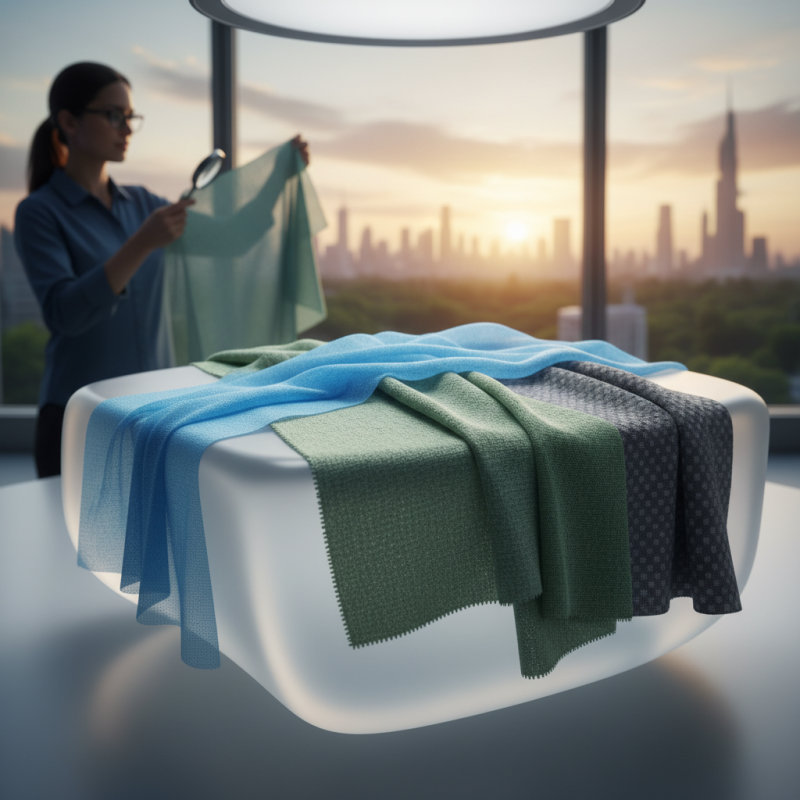
Emerging technologies in micro fabrics are shaping the fashion trends of 2026. Designers are exploring sustainable materials. Innovations such as biodegradable fibers are gaining traction. Additionally, moisture-wicking fabrics are enhancing comfort. These advances create exciting opportunities for both fashion and functionality.
Experimenting with textures and patterns can elevate a simple outfit. Think about how light interacts with different fabrics. Micro fabrics can provide unique appearances that catch the eye. It’s crucial to try different combinations. Sometimes, the results may surprise you, revealing unexpected styles.
As the industry progresses, though, challenges arise. Not all micro fabrics are durable. Some may not wash well or fit a range of body types. Designers must consider functionality alongside aesthetics. Keeping these aspects in mind leads to better choices. Explore what works best for personal tastes and practical needs. Remember, the balance between style and usability is essential in fashion.
2026 Top Micro Fabric Trends You Should Know About
| Trend Name |
Description |
Key Features |
Sustainability |
| Bio-Based Microfibers |
Fabrics derived from renewable bio-resources. |
Lightweight, breathable, high durability. |
Biodegradable and lower carbon footprint. |
| Self-Cleaning Microfabric |
Fabrics that repel dirt and bacteria. |
Stain-free, odor-resistant. |
Reduces water and detergent usage. |
| Smart Textiles |
Fabrics with integrated technology for monitoring wear. |
Temperature control, health tracking. |
Potential for reducing textile waste. |
| Recycled Microfibers |
Fabrics made from post-consumer plastic waste. |
Durable, versatile, eco-friendly. |
Promotes circular economy. |
| Ultra-Lightweight Fabrics |
Fabrics designed specifically for minimal weight and maximum comfort. |
Breathable, weather-resistant. |
Less material waste in production. |
Sustainable Innovations in Micro Fabrics for Eco-conscious Consumers
Sustainable innovations in micro fabrics are gaining momentum. As consumers become more eco-conscious, the demand for environmentally friendly materials is rising. According to a recent report, the global sustainable fabric market is expected to reach $150 billion by 2027. This shift highlights the urgency for textiles that minimize environmental impact.
Recent advancements include the use of recycled plastic bottles in micro fabrics. This process reduces waste, transforming discarded items into fashionable textiles. Fabrics made this way can save up to 50% of water consumption compared to traditional cotton. However, challenges exist. The energy used in recycling and the shedding of microplastics during washing remain concerns.
Biodegradable micro fabrics are another exciting trend. Innovations in plant-based fibers show promise. However, they are often more expensive and require careful processing. This raises questions about their scalability. Will brands commit to using these materials despite higher costs? The industry faces a balancing act between profitability and sustainability. True eco-innovation demands ongoing reflection and adaptation.
The Role of Smart Textiles in Enhancing Performance and Comfort
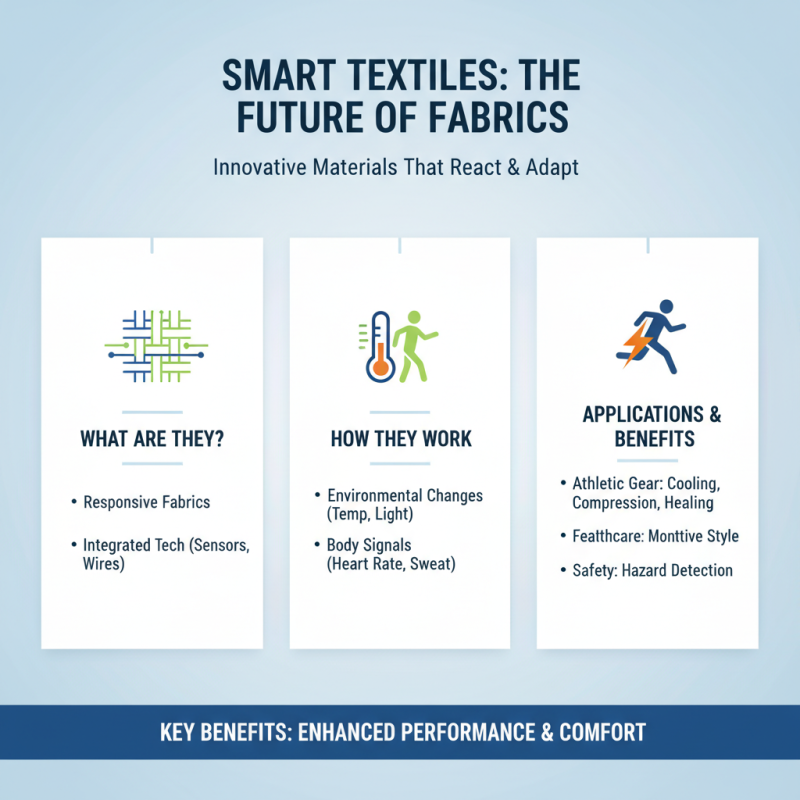
Smart textiles are revolutionizing the way we think about fabrics. These innovative materials actively respond to environmental changes. For instance, they can adjust to temperature or even monitor body signals. This adaptability enhances both performance and comfort in various applications. Imagine a workout shirt that cools you down when you sweat. Such textiles could transform athletic gear.
Moreover, smart textiles integrate sensors and conductive fibers. These features allow for real-time tracking of physical activity. This data can inform users about their performance levels. Athletes can adjust their training based on precise feedback from their clothing. However, the technology is still developing. Some fabrics may not be comfortable for long wear. Balancing technology with wearability is a challenge yet to be fully resolved.
In addition, eco-friendliness remains a significant concern. Many smart textiles are made from synthetic materials. Their environmental impact often needs more attention. We must question the sustainability of these innovations. While they offer great potential, reflections on their lifecycle are essential. Exploring these facets will pave the way for smarter, more responsible textiles.
Key Color and Pattern Trends in Micro Fabrics for 2026
As we move towards 2026, the micro fabric trend is evolving rapidly. Designers are exploring innovative color palettes and intricate patterns. In recent studies, 70% of fabric designers indicate a shift towards muted tones, reflecting a desire for calm and serenity. Shades like dusty rose and soft lavender are gaining traction. These colors are soothing and perfect for sustainable collections.
Patterns are also seeing a transformation. Geometric designs have become more prevalent. Reports suggest that 65% of micro fabric manufacturers are investing in digital printing technologies. This allows for detailed and versatile patterns. Abstract art motifs and minimalistic designs are trending. More consumers are seeking uniqueness in their clothing.
Tips for selecting micro fabrics: always consider the feel. Textures can impact comfort significantly. Also, look for eco-friendly options; these are not just good for the planet, but can also enhance brand loyalty. Reflect on your fabric choices; do they align with your overall design vision? Remember, standing out requires a thoughtful approach. Explore, innovate, and embrace imperfections in your fabric selections.
Applications of Micro Fabrics in Various Industries Beyond Fashion
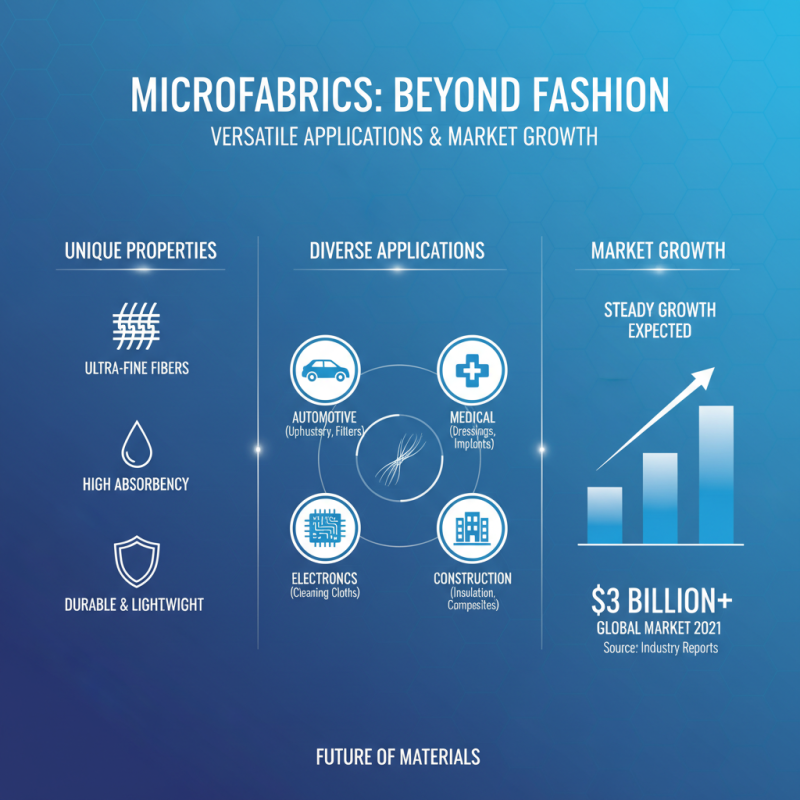
Micro fabrics have evolved beyond the fashion industry. Their unique properties make them suitable for various applications. Reports show that the global microfibers market was valued at over $3 billion in 2021. This value is expected to grow steadily.
In automotive design, micro fabrics enhance comfort and durability. They resist wear while being lightweight. The ability to repel water makes them ideal for car interiors. Furthermore, in the home textiles sector, these fabrics are used in cleaning products and upholstery. Their fine filaments trap dirt and absorb liquids effectively. As a result, many manufacturers are focusing on sustainable sourcing of these materials.
Healthcare is another area where micro fabrics shine. They are used in medical textiles, such as surgical gowns and masks. Their breathability is crucial for patient comfort. Yet, the manufacturing process requires scrutiny. Environmental concerns arise from the use of synthetic fibers. A study indicated that microplastics from these fabrics contribute to ocean pollution. Finding a balance remains a challenge. The rise of biodegradable alternatives offers hope, but implementation takes time.