Top Benefits of Recycled Denim Fabric in Sustainable Fashion?
In the ever-evolving landscape of sustainable fashion, Recycled Denim Fabric stands out as a remarkable innovation. This eco-friendly material not only reduces waste but also promotes a circular economy. The textile industry is one of the largest polluters in the world. Recycled Denim Fabric offers a solution that addresses environmental concerns while appealing to modern consumers.
The process of recycling denim helps conserve water and energy. Traditional denim production is resource-intensive, consuming thousands of liters of water. In contrast, using recycled materials reduces this impact significantly. Additionally, Recycled Denim Fabric often maintains high quality and durability, making it a practical choice for designers and consumers alike.
However, challenges exist in the widespread adoption of recycled materials. Some brands struggle with sourcing sufficient quantities of high-quality recycled fabric. There’s a learning curve for consumers too. Educating shoppers about the benefits of sustainable choices can take time. Nonetheless, Recycled Denim Fabric represents a promising step toward a more sustainable future in fashion.

Benefits of Recycled Denim Fabric in Reducing Textile Waste
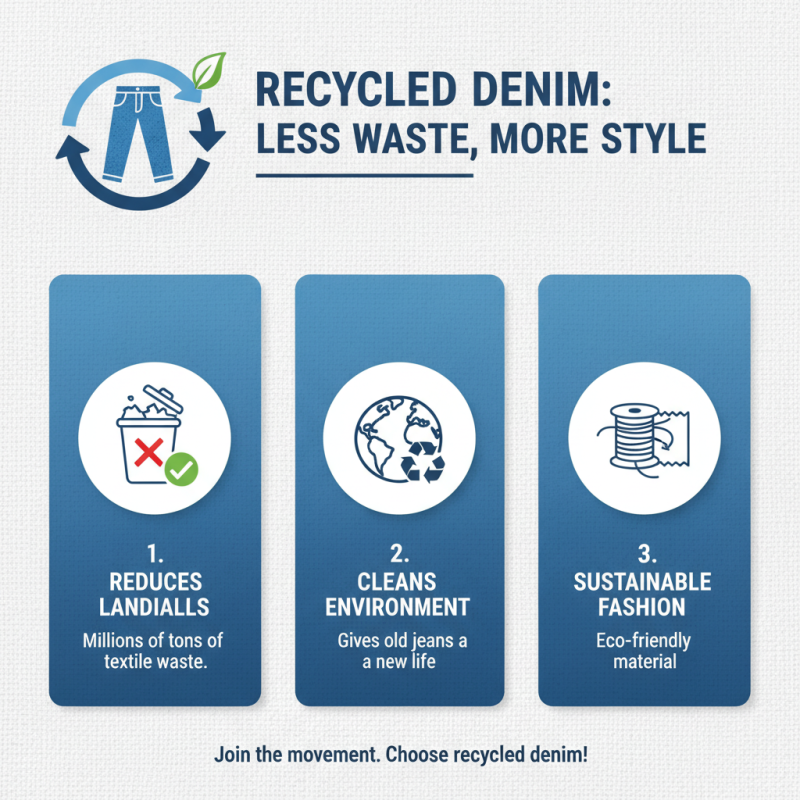
Recycled denim fabric is a powerful tool in sustainable fashion. It helps reduce textile waste significantly. Every year, millions of tons of fabric end up in landfills. Denim is among the most discarded materials. When recycled, it gives a second life to old jeans and scraps. This process helps keep our environment cleaner.
Creating recycled denim involves careful processing. Old denim is shredded and cleaned. Then, it is spun into new yarn. While this method is effective, it still has challenges. The quality of recycled denim can vary. Sometimes it lacks the durability of new fabric. Additionally, not all recycling processes are eco-friendly. This raises questions about the overall sustainability of the method.
Despite these issues, recycled denim plays a crucial role in reducing waste. It encourages consumers to think critically about their clothing choices. The rise of recycled denim reflects a shift towards responsible fashion. More brands now consider eco-friendly materials. However, more innovation is needed in recycling techniques. By addressing these challenges, the fashion industry can inspire further change.
Environmental Impact: Recycled Denim vs. Conventional Fabric Production
The environmental impact of recycled denim fabric is significant. Traditional denim production demands vast amounts of water, often requiring over 7,000 liters per kilogram. In contrast, recycled denim uses much less water. This reduction helps conserve this vital resource, addressing water scarcity concerns.
Moreover, conventional fabric production generates considerable waste. Tons of cotton and synthetic fibers end up in landfills each year. Recycled denim, however, diverts this waste and turns it into new materials. Creating fabric from existing resources diminishes the need for virgin materials. This circular approach minimizes pollution and energy use.
Despite these benefits, it's essential to consider that recycled denim is not without flaws. The recycling process can still produce emissions. Additionally, the quality of recycled denim may vary; some products may not meet durability standards. These issues highlight the need for ongoing innovation and improvement in sustainable practices. Looking at the holistic picture is crucial for true sustainability in fashion.
Energy Savings: The Eco-Friendly Advantages of Recycled Denim Processes
Recycled denim fabric is gaining attention in sustainable fashion due to its significant energy savings. The process of recycling denim involves less energy compared to producing new fabric. Energy consumption can drop by up to 80% when jeans are repurposed instead of manufactured from raw cotton. This is essential, especially as energy resources dwindle.
Furthermore, the eco-friendly advantages extend beyond energy savings. Fewer chemicals are required in recycled denim production, which creates a less toxic environment for both workers and consumers. Yet, the recycling process is not flawless. Some methods might still generate waste and greenhouse gases. Balancing quality and sustainability is crucial.
While recycled denim reduces energy use, it’s important to ask how we can improve this process. Innovations in technology could enhance efficiency further. Consumers, too, have a role in pushing for environmentally friendly practices. It’s about making choices that reflect our values. In the end, every small step can lead to significant change.
Water Usage Reduction: Sustainable Practices in Denim Fabric Production
Water usage is a critical concern in denim production. Traditional methods can consume up to 7,000 liters of water for a single pair of jeans. This alarming statistic highlights the urgent need for sustainable practices. Recycled denim fabric offers a solution by significantly reducing water usage. By repurposing old denim, manufacturers can minimize the water needed for dyeing and processing.
Moreover, the recycling process itself is evolving. Innovative techniques, such as closed-loop systems, help conserve water. These systems recycle water, ensuring less waste is generated. It is important to recognize that while these practices are effective, challenges remain. Not all recycling facilities are equipped for sustainable processes. This inconsistency can lead to mixed results in water conservation.
Additionally, consumer awareness plays a crucial role. Many people are unaware of the environmental impact of denim. Educating consumers about the benefits of recycled denim can drive demand. With increased demand, brands may invest in more sustainable production methods. This shift could lead to an overall reduction in water usage within the industry. The path to sustainability is complex, but the benefits of recycled denim fabric cannot be overlooked.
Water Usage Reduction in Denim Fabric Production
Economic Benefits: Cost-Effectiveness of Using Recycled Denim in Fashion
Recycled denim fabric is becoming a cornerstone of sustainable fashion. It offers significant economic benefits that appeal to both manufacturers and consumers. One major advantage is cost-effectiveness. By repurposing old denim, companies reduce raw material expenses. This can result in lower retail prices, making sustainable choices more accessible for shoppers.
Moreover, the production process for recycled denim often requires less water and energy compared to creating new fabric. This reduction in resource consumption translates to savings for manufacturers. As companies embrace recycling, they can invest these savings into innovative practices. This could further enhance their sustainability efforts.
However, not all recycled denim is created equal. Quality can sometimes be inconsistent due to varying sources of recycled material. Brands must ensure they maintain standards while exploring new sourcing methods. This reflects an ongoing need for improvement in the recycling process. Sustainable fashion is not just about eco-friendliness; it's also about creating a reliable product that customers can trust.
Top Benefits of Recycled Denim Fabric in Sustainable Fashion - Economic Benefits: Cost-Effectiveness of Using Recycled Denim in Fashion
| Benefit |
Description |
Cost Savings (%) |
Environmental Impact |
| Lower Material Costs |
Utilizing recycled denim reduces the need for virgin materials, leading to overall cost savings. |
30% |
Reduced water usage by 70% compared to conventional denim production. |
| Reduced Waste |
Recycling denim minimizes textile waste in landfills. |
25% |
Less textile waste contributes to lower CO2 emissions. |
| Energy Savings |
Recycling denim generally uses less energy than producing new fabric. |
20% |
Energy reductions help lower the carbon footprint. |
| Brand Loyalty |
Sustainable practices attract eco-conscious consumers. |
N/A |
Promotes a positive brand image and engagement. |
| Compliance with Regulations |
Using recycled materials helps meet environmental regulations. |
N/A |
Reduces the risk of penalties related to waste management. |