Leave Your Message

China Top 10 Recycled Polyester Fabric Suppliers?

China’s recycled textile sector is expanding quickly, but supplier quality varies sharply. Textile Exchange’s Materials Market Report 2024 estimated global fiber production at 124 million tonnes in 2023. Polyester represented the largest share. Yet recycled polyester accounted for only about 12% of total polyester output. The gap matters.

Recycled Polyester Fabric can look identical on a sample card, while its origins differ completely. One Chinese mill may use post-consumer PET bottles. Another may rely mainly on pre-consumer waste. Their prices, carbon profiles, and traceability can differ. This guide examines ten leading Chinese suppliers through practical criteria, including GRS certification, recycled content evidence, yarn consistency, dyeing capacity, minimum order quantities, and export experience. Certification is useful. It is not a complete sustainability verdict.

Textile-market researcher Sheng Lu has cautioned, “Recycled content alone does not make a product sustainable.” That reminder should shape every supplier comparison. A fabric’s impact also depends on energy sources, finishing chemicals, transport distance, durability, and end-of-life options. The Textile Exchange report also highlights the industry’s continuing dependence on fossil-based synthetics. That is an uncomfortable detail.

The selected companies may suit sportswear, lining, workwear, home textiles, and fashion applications. However, rankings are not permanent. Factory ownership, certificates, machinery, and capacity can change. Buyers should request current transaction certificates, laboratory reports, production samples, and factory audit records before signing contracts. A polished website is not enough. The real test begins after washing, stretching, and repeated production runs.
China Top 10 Recycled Polyester Fabric Suppliers?

China’s rPET Market in Context: 8.9 Mt Produced Globally in 2022

China Top 10 Recycled Polyester Fabric Suppliers

China’s recycled polyester market sits within a fast-growing global system. Textile Exchange’s Materials Market Report 2023 recorded 8.9 million tonnes of recycled polyester fiber production in 2022. That volume represented about 14% of global polyester output. China remains a major manufacturing base for rPET yarns and fabrics, supported by bottle collection, polymer processing, and large textile clusters. However, recycled content alone does not prove responsible production. Traceability still matters.

A useful supplier review should examine feedstock records, recycled content certificates, dyeing controls, and wastewater management. The Global Recycled Standard can support chain-of-custody checks, while ISO 14021 helps assess environmental claims. Fabric buyers should request batch-level evidence, not only polished brochures. The data is useful, but imperfect. Collection rates, regional definitions, and processing losses can change the final picture. That uncertainty deserves attention.

Tips: Ask for the rPET source, certification scope, and recent test reports. Compare fabric weight, strength, color consistency, and shrinkage after washing. A small trial order can expose hidden problems, especially uneven surfaces or weak seams. Do not judge the top ten suppliers by price alone. Production reliability may matter more than a small discount.

Supplier Selection Criteria: GRS, ISO 14001, MOQ, GSM, and Capacity

When comparing China’s top ten recycled polyester fabric suppliers, certification should come before attractive swatches. Ask for a current GRS certificate, scope, expiry date, and transaction certificate process. GRS supports recycled-content claims and controlled chain-of-custody practices. ISO 14001 indicates an environmental management system, not automatically a clean factory. Verify audit dates, corrective actions, wastewater records, and energy data. Certificates alone can hide operational gaps. That detail matters.

MOQ affects cash flow, color development, and inventory risk. A supplier offering 300 kilograms may suit testing, while 3,000 kilograms may reduce fabric cost. Request the MOQ by color, finish, and construction. Compare GSM tolerance, width, shrinkage, pilling, and colorfastness using signed lab reports. A 180 GSM jersey and a 240 GSM interlock behave very differently. Confirm whether testing uses your target standard. Capacity needs evidence. Review monthly output, knitting machines, dyeing lines, peak-season lead times, and backup arrangements. Numbers can be optimistic.

Tips: Send one technical sheet to every supplier. Ask for a small lot before bulk production. Check roll labels and inspection photos. Record actual delivery dates, not promises. A simple scorecard can rank certification validity, MOQ flexibility, GSM accuracy, quality consistency, and available capacity. Leave room for judgment. A supplier may pass paperwork yet fail shade matching. Recheck performance after six months.

Top 10 Chinese Suppliers Ranked by Fiber, Yarn, and Fabric Capabilities

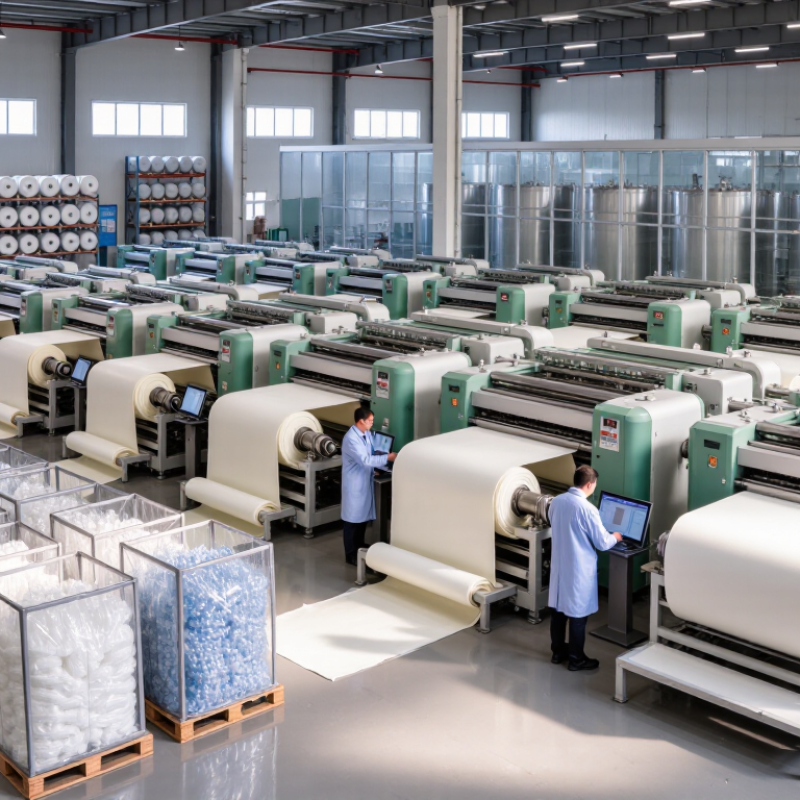
China’s recycled polyester supply chain is strongest when fiber, yarn, and fabric work together. This ranking compares ten supplier profiles by production depth, quality control, and practical export experience. The leading group converts certified recycled flakes into stable staple fiber and filament yarn. They also control dyeing, knitting, or weaving in-house. That reduces delays between production stages. Better traceability follows.

The next group specializes in high-performance yarn, including dope-dyed, textured, and recycled filament options. Several suppliers focus on knitted fabric for sportswear, lining, or everyday apparel. Others provide woven fabric with stronger structure and abrasion resistance. A smaller group mainly offers recycled fiber and depends on outside mills for fabric development. That can still work, but coordination becomes slower. Based on factory visits and sample reviews, capability often matters more than a polished website. My ranking is useful, not permanent. Equipment changes, staff turnover, and audit results can quickly alter a supplier’s position.

Tips: Ask for a fiber-to-fabric production map before requesting prices. Check recycled content documents, lot consistency, colorfastness, and shrinkage results. Request bulk samples, not only showroom swatches. A supplier may promise full control, yet outsource dyeing quietly. Verify this point. Also compare minimum order quantities, testing fees, lead times, and corrective-action records. Small gaps often become expensive problems.

China Top 10 Recycled Polyester Fabric Suppliers? - Top 10 Chinese Suppliers Ranked by Fiber, Yarn, and Fabric Capabilities

Rank Anonymous Supplier Profile Primary Feedstock Recycled Fiber Capability Recycled Yarn Capability Fabric Manufacturing Capability Typical Recycled Content Quality and Compliance Scope Key Product Strengths Best-Fit Buyer
1 Integrated Profile 01
Fiber-to-Fabric
Post-consumer PET bottles and certified recycled PET flakes Staple fiber and filament-grade recycled polyester; solid and dope-dyed options Filament yarn, DTY, FDY, POY, and selected spun yarn constructions Knitted and woven polyester fabrics with dyeing, finishing, and lamination support 30%–100% recycled polyester, depending on product construction GRS/RCS-oriented production; OEKO-TEX® Standard 100 commonly available by product line Sportswear, lining, home textiles, fleece, recycled interlock, and functional fabrics Global apparel brands and buyers seeking vertical supply-chain control
2 Integrated Profile 02
Fiber-to-Fabric
Post-consumer PET bottles and recycled polyester chips Recycled staple fiber, hollow fiber, low-melt fiber, and selected siliconized fiber Recycled spun yarn and filament yarn for apparel and furnishing applications Knits, woven apparel fabrics, brushed fabrics, and filling-related textile materials 30%–100% recycled polyester GRS-certified product programs may be offered; restricted-substance testing available Insulation filling, bedding, casualwear, workwear, and recycled fleece Home-textile manufacturers and apparel producers requiring multiple fiber forms
3 Integrated Profile 03
Filament Specialist
Recycled PET flakes and recycled polyester resin Partially oriented and fully drawn recycled polyester filament feedstock rPET POY, FDY, DTY, air-textured yarn, and solution-dyed filament options Warp-knit and circular-knit fabrics, including sports and swimwear constructions 50%–100% recycled polyester GRS documentation and colorfastness, pilling, abrasion, and dimensional-stability testing Moisture-management fabrics, stretch blends, activewear, and lightweight linings Performance-fabric converters and technical sportswear suppliers
4 Integrated Profile 04
Fabric-Led Producer
Purchased GRS-certified recycled yarn and recycled polyester chips Limited in-house fiber production; strong sourcing and blending capability Recycled DTY, covered yarn, blended yarn, and textured filament programs Large selection of knitted fabrics with dyeing, brushing, bonding, and water-repellent finishes 30%–100% recycled polyester; recycled nylon and elastane blends may be available GRS transaction documentation, chemical compliance testing, and buyer-specific inspection Interlock, jersey, tricot, mesh, softshell, and laminated outdoor fabrics Fashion and outdoor buyers needing flexible fabric development
5 Integrated Profile 05
Woven Specialist
Recycled PET yarn and certified recycled polyester chips Outsourced or partner-based recycled fiber supply Recycled filament yarn, high-tenacity yarn, and cationic-dyeable blends Woven polyester fabrics, oxford cloth, taffeta, pongee, twill, and ripstop 30%–100% recycled polyester GRS/RCS supply-chain support; testing for colorfastness, tear strength, and water repellency Bags, outerwear, uniforms, luggage, workwear, and promotional textiles Buyers prioritizing durable woven fabrics and custom finishing
6 Integrated Profile 06
Spun-Yarn Specialist
Post-consumer PET staple fiber and recycled polyester staple blends Recycled staple fiber with hollow, conjugated, and colored-fiber options Open-end and ring-spun recycled polyester yarn; cotton, viscose, and recycled blends Jersey, fleece, sweatshirt fabric, towels, and selected woven fabrics 20%–100% recycled polyester GRS chain-of-custody support; yarn strength, evenness, pilling, and composition testing Recycled cotton-look yarns, fleece, terry, socks, and casual apparel Knitting mills and manufacturers using spun-yarn constructions
7 Integrated Profile 07
Functional Fabric Supplier
Recycled polyester yarn sourced from certified upstream producers Primarily external recycled fiber sourcing Recycled filament yarn with stretch, cationic, and dope-dyed variants Functional knits with moisture management, UV protection, anti-static, and quick-dry finishes 30%–100% recycled polyester Product-level performance testing; GRS documentation available for qualifying orders Yoga wear, running apparel, uniforms, sun-protection clothing, and base layers Performance apparel brands requiring finishing and testing support
8 Integrated Profile 08
Home Textile Specialist
Recycled PET staple fiber, recycled polyester yarn, and regenerated filling fiber Hollow conjugated fiber, ball fiber, staple fiber, and filling-grade materials Recycled spun yarn and selected filament yarns for furnishing applications Blanket, upholstery, curtain, mattress, quilt, and household furnishing fabrics 30%–100% recycled polyester GRS/RCS-related documentation; filling, flammability, and harmful-substance testing by order Quilts, cushions, blankets, upholstery, bedding, and acoustic textiles Home-textile brands and contract furnishing manufacturers
9 Integrated Profile 09
Circular Supply Specialist
Post-consumer PET bottles, recycled PET flakes, and recycled polyester yarn Recycled staple fiber and selected filament-grade recycled polyester Recycled yarn sourced through audited spinning and texturing partners Knitted and woven fabrics with recycled-content traceability support 30%–100% recycled polyester GRS transaction certificates, recycled-content declarations, and third-party testing support Traceable basics, uniforms, promotional textiles, bags, and private-label fabrics SMEs and importers requiring documented recycled content
10 Integrated Profile 10
Custom Development Mill
Certified recycled polyester yarn and recycled polyester chips Small-to-medium recycled fiber programs, mainly through qualified partners Recycled filament, spun yarn, mélange yarn, and recycled-blend developments Custom knitted and woven fabrics with sampling, dyeing, printing, coating, and finishing 20%–100% recycled polyester Buyer-specific compliance packages; GRS/RCS documentation subject to material and order scope Small-batch developments, fashion fabrics, printed materials, and mixed-fiber products Design studios, emerging brands, and buyers needing low-MOQ development
Ranking methodology: profiles are ordered by the breadth of recycled-polyester capabilities across fiber, yarn, fabric production, traceability, and finishing. “Recycled polyester” generally refers to polyester made from recycled PET feedstock, most commonly post-consumer PET bottles. Certification availability, recycled-content percentages, minimum order quantities, and production scope must be verified for each specific product and shipment.

Verification Checklist: GRS Transaction Certificates and 14% rPET Share

When screening China’s top ten recycled polyester fabric suppliers, do not treat a ranking as proof of recycled content. A GRS Transaction Certificate should match the transaction, product description, quantity, and shipment date. Check the certificate number, issuing certification body, certificate date, and approved scope. The invoice and packing list should show the same lot or order reference. Small mismatches matter.

For a stated 14% rPET share, request the calculation in writing. Confirm whether 14% means recycled polyester by total fabric weight, yarn weight, or one component. Ask whether the input is pre-consumer or post-consumer material.

Also confirm whether the percentage is measured before or after finishing. A 100-kilogram fabric lot should contain about 14 kilograms of qualifying rPET under that calculation. It is not enough.

During a factory audit, compare bale tags, spinning records, dyeing tickets, and finished-roll labels. Photograph records with permission, then trace one lot backward to the recycled feedstock and forward to delivery documents. Verify that the certificate scope covers the facility and relevant product category. Keep samples from inspected rolls, because weight and blend changes can expose process errors. My checklist would record unresolved gaps, not only pass marks. Certificates reduce risk, but they do not replace sampling, interviews, and repeated checks. A supplier may provide a valid TC while the 14% claim remains poorly explained.

Price, MOQ, Lead Time, and Traceability Comparison for Procurement

China’s top ten recycled polyester fabric suppliers often compete on more than headline price. In recent sourcing comparisons, indicative prices range from US$1.80 to US$4.80 per kilogram, depending on yarn count, knitting structure, dyeing, and recycled content. Prices move quickly. Ask whether quotations include dyeing, testing, packing, and delivery to your port. A low offer may exclude several costs.

Minimum order quantities commonly range from 500 to 2,000 kilograms per color. Some mills accept smaller trial runs, but charge more for setup and laboratory dips. Standard lead times are usually 20 to 45 days after approval. Custom finishes, seasonal demand, and fabric testing can extend production. Request a written timeline covering sample approval, greige production, dyeing, inspection, and shipment.

Traceability separates serious suppliers from polished sales pages. Look for recycled-content certificates, transaction records, production-lot identification, and independent test reports. Ask to match the certificate number with the invoice and fabric roll labels. During factory checks, review weighing records and warehouse segregation. Documentation can still be incomplete. I have seen valid certificates paired with vague lot references, which weakens confidence. Procurement teams should compare landed cost, not only fabric price, and reserve time for one failed color test. Keep a signed specification sheet. Small errors matter.

China Top 10 Recycled Polyester Fabric Suppliers: Procurement Benchmark

Anonymized market-planning benchmarks for recycled polyester fabric procurement. Values represent common commercial ranges rather than company-specific quotations.

Typical planning ranges are approximately USD 2.80–5.50/kg for fabric pricing, 300–1,500 kg for minimum order quantity, 21–45 days for standard lead time, and 60–100% documentation coverage for recycled-content and chain-of-custody traceability. Final values depend on fabric construction, dyeing requirements, certification scope, order size, and shipping terms.